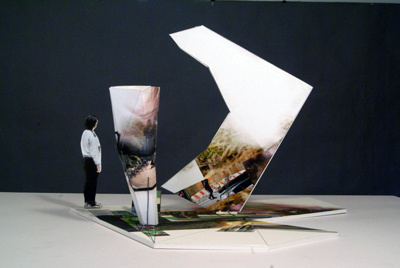
Monument #1
Monument #1
Monuments
Interactive Multimedia Sculptures
(In-progress)
© 2008, Michael O'Rourke
Monuments is a series of sculptures that
challenge the viewer's assumptions about how we know and what we know of
the world around us. The large forms of each scupture define a space, but
are also covered with printed and hand-drawn imagery as well as real-time
and non-realtime video. As viewers walk into the space, hidden cameras capture
their image, which is incorporated raw or altered into the sculpture, either
immediately or after some delay. Similarly, environmental sound is captured
and later emitted from the walls of the sculpture in its original or altered
form. Thus the structure acquires a sense of memory through the experiences
of the viewers.
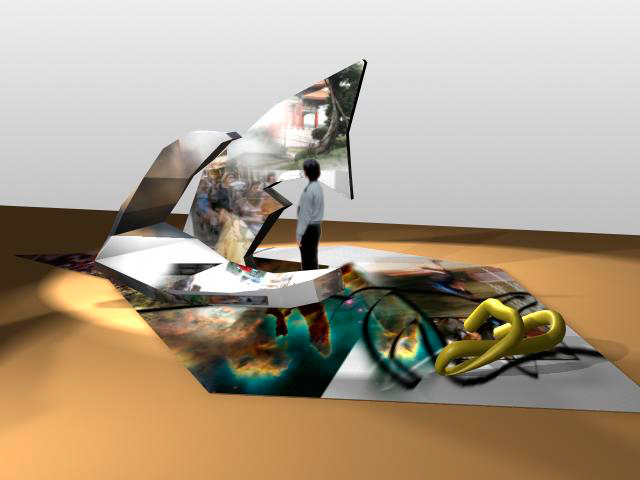
Monument #2
The conceptual challenge posed by each sculpture is initiated by its title, which prods the viewer to ask: "Monument to what?", but declines to answer that question. The root of the word "monument" is the Latin monere, to remind. We are reminded of the immediate past as the record of the experience is seamlessly woven into the work. We see ourselves, but we see ourselves as we were a few seconds ago, or perhaps a few days ago, or perhaps we see someone else. Our comprehension of the whole composition requires an exercise of memory, as the totality of the forms and their imagery can not be seen from any one point of view. We are guided by movements and sounds, steered, lured in one direction or another. We must walk into and around the sculpture, remembering what we saw earlier from some other angle, in order to piece together an understanding of the composition, invariably changing it through our experience.
The mixing of media challenges our conceptions of art categories. By melding still and moving imagery and inviting the audience to move through a solid form, the monument intentionally blurs the distinction between static and dynamic forms and their perception. Even the floor becomes part of the artwork, echoing the forms and colors of the conventionally "three-dimensional".